



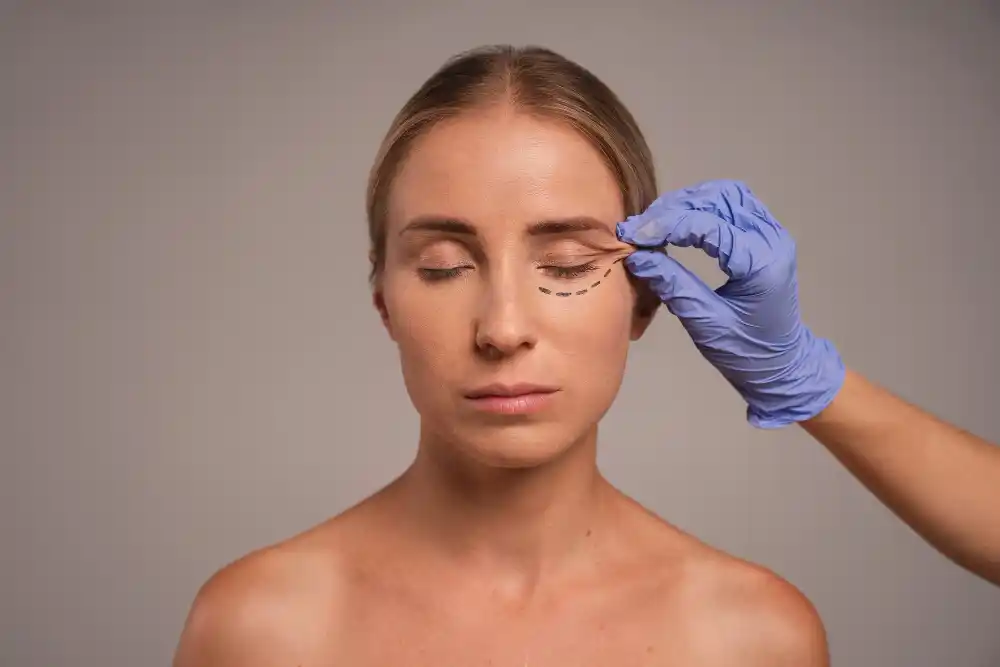
Under eye fillers (tear trough injections) are highly sought after to reduce dark circles and hollows. However, the periorbital area is widely considered by aesthetic professionals to be the most technically unforgiving region of the face. When under eye fillers go wrong, the results—ranging from chronic puffiness to a bluish discoloration—are highly visible and distressing.
Whether you are a patient dealing with a botched result or a practitioner reviewing complication management, understanding the anatomy, the signs of incorrect placement, and the exact correction protocols is essential.
Why the Under Eye Area Is High Risk
The tear trough is not a simple depression; it is a complex anatomical junction. Errors here are amplified due to:
- Paper-Thin Skin: The skin under the eyes is the thinnest on the body, meaning any superficial filler placement will be immediately visible as a lump or color change.
- Hydrophilic Environment: Hyaluronic acid (HA) fillers attract water. In an area with naturally sluggish lymphatic drainage, the wrong filler choice leads to chronic water retention.
- Complex Vasculature: The area is dense with blood vessels, making severe bruising or even vascular occlusion a critical risk if a needle or cannula is mishandled.
Common Complications: Normal vs. Botched
It is crucial to distinguish between standard post-treatment recovery and a complication that requires clinical intervention.
| Symptom | Routine Post-Treatment Effect | Sign of Filler Gone Wrong |
|---|---|---|
| Swelling | Mild puffiness lasting 3 to 7 days, improving daily. | Persistent "bags" or malar edema (festoons) lasting months. |
| Color Changes | Standard purple/yellow bruising that fades within two weeks. | A permanent bluish-grey tint under the skin (The Tyndall Effect). |
| Texture | Slight firmness that softens as the HA gel integrates. | Visible lumps, hard nodules, or a "sausage-like" roll under the eye. |
What Exactly Went Wrong? (The Clinical View)
1. The Tyndall Effect (Bluish Discoloration)
If your under-eye area looks blue or grey, it is not a bruise. The Tyndall effect occurs when clear hyaluronic acid gel is injected too superficially (too close to the surface of the skin). Due to Rayleigh scattering, light hits the filler particles and reflects a blue wavelength back to the eye.
2. Chronic Puffiness and Malar Edema
Using a highly hydrophilic (water-loving) filler—or injecting too large a volume—can obstruct the delicate lymphatic channels under the eye. This causes the tissue to hold water continuously. Even months later, patients may wake up with severe puffy eyes that fluctuate with their salt intake or sleep schedule.
3. Wrong Filler Selection
Not all HA fillers belong under the eyes. Robust, high-G-prime fillers designed for lifting cheeks (like Juvederm Voluma) will look incredibly harsh and lumpy in the tear trough. A softer, cohesive filler (like specific Restylane formulations) is required.
How Professionals Correct Botched Under Eye Filler
The biggest mistake inexperienced practitioners make when trying to fix a lumpy tear trough is injecting more filler to "smooth it out." This only exacerbates the lymphatic blockage.
The gold standard for correcting under eye fillers gone wrong is dissolving the product. Because these fillers are made of hyaluronic acid, they can be safely melted away using a prescription enzyme.
- The Hyaluronidase Protocol: The practitioner will inject targeted micro-doses of hyaluronidase directly into the botched filler. The enzyme breaks down the HA bonds within 24 to 48 hours, allowing the body to flush it out naturally and restoring the original anatomy.
Are Fillers Always the Right Choice? (Alternatives)
A frequent reason under eye fillers look bad is poor patient selection. If the darkness is caused by hyperpigmentation or thin skin showing the muscle below—and not by actual volume loss—filler will only make the eye look puffy.
In these cases, alternative treatments focusing on skin quality are much more effective:
- Targeted Mesotherapy: Products specifically formulated for the periorbital area, such as Dermaheal Dark Circle Solution or Dermaheal Eyebag Solution, can improve microcirculation and brighten the skin without adding bulky volume.
- Polynucleotides and Skin Boosters: These stimulate collagen production to naturally thicken the under-eye skin over time.
FAQ: Under Eye Fillers Gone Wrong
Can the Tyndall effect go away on its own?
While hyaluronic acid fillers slowly degrade over 9 to 18 months, superficially placed filler causing the Tyndall effect can persist for years because there is very little natural hyaluronidase activity just beneath the skin surface. Professional dissolving is usually required.
Does dissolving under eye filler damage my natural tissue?
When performed correctly with precise dosing by a qualified medical professional, hyaluronidase targets the cross-linked synthetic hyaluronic acid filler, not your natural permanent tissue. Temporary volume depletion may occur, but your body naturally replenishes its own native HA within a few days.
Why do my tear trough fillers look swollen months later?
This is often due to the filler's hydrophilic nature drawing in water, combined with impaired lymphatic drainage in the under-eye area. Fluctuations in swelling that occur weeks or months after treatment are a strong indicator that the filler needs to be dissolved.
Can I just massage lumps under my eyes?
You should never aggressively massage the under-eye area unless explicitly instructed by your injector. Massaging firm nodules weeks after treatment is ineffective and can cause further tissue trauma. Firm lumps usually require chemical dissolution.
Professional Disclaimer: This content is provided for educational and informational purposes only. It does not provide medical advice, treatment protocols, or self-care instructions. All injectable procedures and complication management must be performed by qualified healthcare professionals in accordance with applicable regulations and approved medical standards. Please review our full Disclaimer and Terms of Use.