



What Makes a Chin Look Pointy?
A chin may appear pointy due to several distinct anatomical factors. Importantly, a pointy chin is not always caused by a lack of volume; in some cases, skeletal shape plays a dominant role. Common causes include:
- Narrow mandibular (jaw) width.
- Excessive vertical projection of the mental apex (the tip of the chin).
- Insufficient lateral chin support.
- Volume deficiency in the prejowl sulcus or anterior mandible, which makes the chin protrude visually.
When Fillers Work vs. When They Don't
Dermal fillers may help when the pointy appearance is related to soft tissue imbalance rather than bone structure. Below is a clinical comparison to help set realistic expectations:
| Ideal Candidates for Chin Filler | When Filler is NOT the Right Solution |
|---|---|
| The chin lacks lateral width rather than forward projection. | The chin is excessively projected forward due to underlying bone structure. |
| Lateral chin support is underdeveloped or volume is lost in the prejowl area. | There is significant skeletal asymmetry. |
| The lower face appears tapered mainly due to age-related soft tissue volume loss. | The primary concern is extreme vertical length rather than contour shape. |
| The patient seeks subtle reshaping and profile balancing. | The patient expects permanent or dramatic structural changes. |
In inappropriate cases, adding volume can actually worsen projection instead of improving facial harmony. Such cases may require complex treatment approaches or surgical consultation.
Chin Filler Placement Considerations
Correcting a pointy chin requires precise placement. The goal is redistribution and balancing, not enlargement. Conservative placement helps prevent an exaggerated or "heavy" appearance in the lower face.
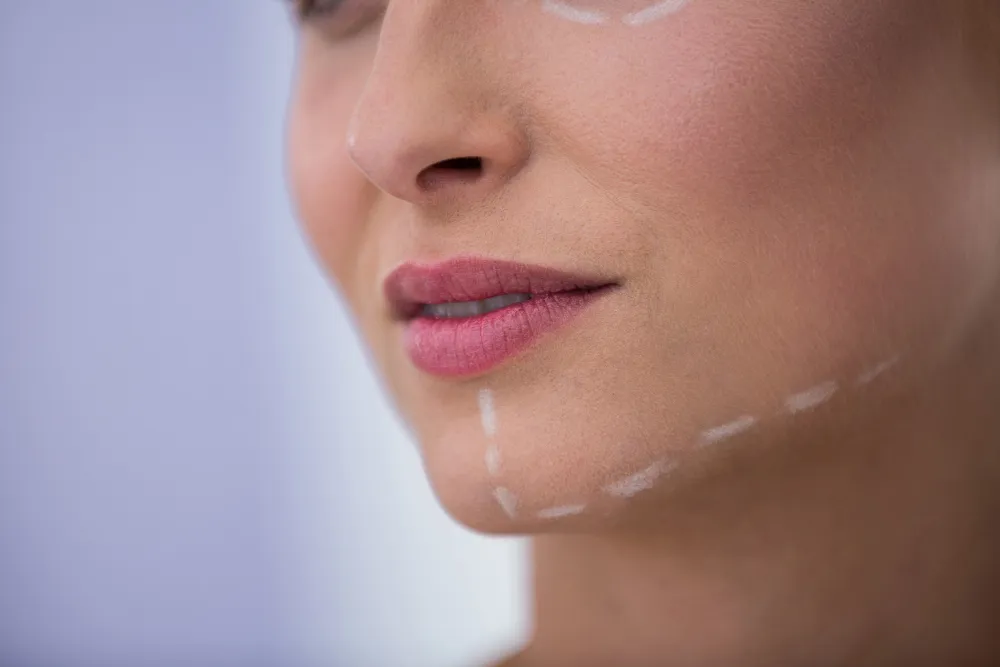
- Lateral Focus: Volume is often placed laterally (on the sides of the chin) rather than centrally to build width.
- Depth: Deep supraperiosteal placement (near the bone) is preferred for structural support.
- Avoid Overfilling: Overfilling the mental apex must be strictly avoided to prevent elongating the chin further.
What Type of Filler Is Used for Chin Shaping?
Chin contouring typically requires structured, high-cohesion fillers capable of maintaining shape under pressure from surrounding muscles. Products with a higher G-prime (firmness) and lifting capacity are essential.
Most practitioners prefer structurally robust hyaluronic acid (HA) options. These materials allow for deep placement, predictable contouring, and crucially, they offer reversibility (via hyaluronidase) if correction is needed.
Risks and Limitations
As with any injectable procedure, treating the lower face carries inherent risks. These risks are minimized through conservative dosing and careful anatomical assessment by a qualified provider.
- Overprojection if filler is placed incorrectly at the tip.
- Noticeable asymmetry.
- Product migration if excessive volume is injected in a single session.
- An unnatural contour if the patient's underlying anatomy is misjudged.
Dermal fillers can soften and balance a pointy chin beautifully, but they do not alter bone structure. The realistic outcome is improved proportion—not complete reshaping. Patients should understand that subtle correction is often the most aesthetically pleasing result.